Friday, January 6, 2012

Indiana and the "Right to Work"

"A lot of smart, young men have come out of Indiana - and the smarter they were, the faster they left" - attributed to Mark Twain

I really shouldn't, but I've a nostalgia for Indiana. It is, without a doubt, a primitive, benighted realm, populated with proudly ignorant troglodytes, and yet, it was once my home, and I would go back.

No small part of the nostalgia is a love of the land. I was fortunate to be raised up in Northwest Indiana. The middle third of the state is flat as a griddle, an unremitting and wearisome monotony, with only the sky for respite. In cloudless summers, or overcast winters, one feels like a bacterium wedged between glass layers on a microscope slide. There is just an overwhelming and paradoxical sense of agoraphobic claustrophobia. Wrist-slitting country.

Little wonder then, before the age of mass communications, the inhabitants resorted to sexual escape - rural perversions and incestuous burrowing on a pandemic scale. And out there alone on the prairie, if you want to bugger your kin, who is going to know? Who is there to tell? Ick. Ugh.

Things were better where I grew up. To the immediate north was Lake Michigan, and the Indiana Dunes. Great for summers, when the refreshing relief of those waters to the positively Amazonian conditions of the Midwest cannot adequately be described or imagined, but only experienced. Running down the vast sand dunes in thousand league boots - again, an experience that a paltry imagining cannot compare to.

Nice, huh?
The glaciers of the last Ice Age had dumped a great deal of Ontario in a region of hills and valleys known as the Valparaiso morraine. There are all sorts of dark gullies, deep sandy kettle lakes, mossy streams, and tree covered knolls to explore - secret hidden places that were, yes, even to a godless heathen such as yours truly, magical, mystical, and sacred. Real magic. Nature's magic. And I didn't even need to be stoned to recognize it.

Ah, but the people? You know, if Ohio still wears a bowler hat and chews on dime cigars, then Indiana wears a straw boater and spats. It's completely fucked, and living there, unfortunately, means receiving a mandatory lethal injection of conservative political RNA into your system. I've managed to avoid most of the consequences of that. Which is why I find the current Indiana Assembly's attempts to pass so-called "Right to Work" laws so repugnant.

There is, of course, nothing about any employee rights in the "right to work" law. The purpose is to reduce union funding, and also to encourage lower wages for employees. And, given the current economic straits Indiana workers find themselves in, they would be in a difficult position to complain.

Federal laws stipulate unions must represent anyone with a grievance that happens to be employed in the same company. Under Indiana's proposed legislation, companies and unions would be banned from negotiating a contract that requires non-members to pay fees for the representation the union must provide to all employees of a bargaining unit. In other words, the union must represent an aggrieved employee, but receive no compensation. This is basically a version of "taxation without representation".

Republicans cite high unemployment in Indiana and an incentive for businesses to locate here, much the same way as Southern states have encouraged employment with less-than-quality jobs in a "race to the bottom" wage fuck.

Problem is, its the Republican administration's fault that the employment picture is so shitty. Mitch Daniels, the so-called "cerebral" governor of Indiana (and the choice of many right-wing politicians and pundits for Presidential candidate) was, just a short year ago, being praised for the state's budget surplus. As it turns out, those budget numbers were not completely kosher.

Early in Daniels' first term, made improving jobs and income one of his most important goals. So, how is Indiana doing? Income growth has been negative. Indiana lags the nation. In 2002, Indiana ranked 33rd in the nation. Under Daniels, in 2010, Indiana ranked 41st. How about jobs? Well, while the rest of country saw unemployment rates reduced or at least hold steady, Indiana lost jobs. In fact, it's been only in the past six months that Indiana unemployment rates have held steady.

I think we have to rate Governor Daniels with a massive FAIL.

(And keep in in mind, Daniels is the guy that Romney is ready a job to, "any job". Pity Daniels doesn't feel the same way about his constituents).

Okay, was that parenthesized statement fair? Yeah, I think so. Daniels had it within his power to do a number to not only "create" jobs, but quality jobs. That "balanced" budget of his could have been used for Keynesian stimuli (and please, don't give that crap that it doesn't work. It works.) He could have offered skills programs, shared work hours, educational grants, infrastrucutre projects, all kinds of things that would have put his precious state budget in the red.

So, ultimately, I can't take Daniels seriously. Neither does Krugman. 'Nuff said.


Thursday, January 5, 2012

Space is the Place (continued)

This summary is not available. Please click here to view the post.

Wednesday, January 4, 2012

Space is the Place

For starters, score one for Kurman's prediction registry. Ekso Bionics has developed an exoskeleton for the disabled. Though not quite ready for street use, Ekso is set to sell the suit to rehab clinics in America and Europe. Not much of a prediction, given that, as I observed in this essay, the real market for powered exoskeleton suits is in the limited mobility field. Still, nice to see a worthwhile application outside of the usual bonehead Republican crush/kill/destroy type of applications.

Speaking of bonehead Republicans, I detected a gassy little whine emanating from the too-real-to-be-a-parody-but-oh-how-they-try Investors' Business Daily, the media version of  exoskeleton for the limited thinking and intellectually impaired. Andrew Malcolm, who looks like he needs an Ekso Bionic suit to get around, and also is probably overdue for some radical surgical intervention of excess fecal buildup, laments that the Chinese are going to the Moon while the US has to rent seats on rickety old Russian spacecraft. And obviously, it's All Obama's Fault. Right? He canceled the aging white elephant shuttle fleet with nothing to replace it, like the Orion capsule and the Heavy Lift Launch System. Oops. Wait, Andrew. That's going to happen. Are you lying? Or just conveniently forgetful?

But hey, Andrew, twas Obama that gutted federal funding for the NASA, basic federal R&D funding, funding for STEM (Science, Technology, Engineering, and Mathematics) education programs, right? Right? Not the Teatards. It's all Obama's fault that science and education funding, the greatest economic engine in the nation, creating more than half of all new jobs, will be stifled. Andrew, you are a fucking asshole. But then, that's what you are paid for.

Let's ignore the federal subsidies to private aerospace companies like SpaceX and Orbital. Although, Andrew probably views federal subsidies as a bad thing, like, for example, the Defense Department's subsidizing the microchip industry to use in missiles. That boondoggle never panned out, did it, Andrew?

Let's ignore that SpaceX is sending a commercial flight to the ISS this Feb. 7th. Or that Orbital is set to launch in May. Or that Paul Allen is getting into the space business with a space plane.

And who was it that killed Apollo? Too expensive they said. $25 billion in one-time development cost, to develop an entirely new industry, and then just drop the whole thing after a few moon shots. Nixon. A Republican administration. Figures.

Hey, remember Skylab? That was put up with a modified Saturn 1B. That was built by, who built that? Oh that's right. Chrysler built that. Let that sink in for a minute. Here, this will help:

FUCKING CHRYSLER BUILT THAT!!!

THAT was 195,000 pounds in low earth orbit, four times the Shuttle's cargo capacity. That launch set the US of A back 170 million smackers. And if we work that out, that's $870/lb. And the Shuttle was, what? $5000 - 10,000 / lb.

No School like Old Skool.
Had we continued a post Apollo program as planned, which was to not only keep Skylab in orbit, but greatly expand it's size and scope, we could have had not only a ISS station about ten times the size of the current one, amortized the cost of the space program with continued missions to a commerial level, brought launch costs within the $100/lb range, and probably have kept a lot of people in Detroit busy building space rockets.

What a fucking waste.

Well, it's not too late.  But, now what we really need (since we have so many people working on the Earth to LEO problem), is a really good nuclear engine, like NERVA.

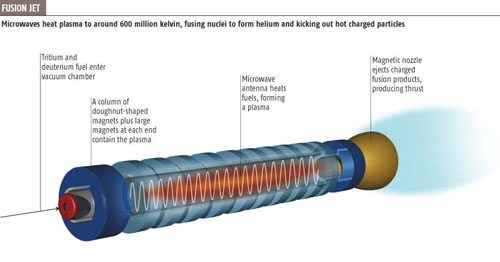
Yeah, Okay, I'd take a fusion thruster also.
Yeah, what happened to that?

Friday, December 23, 2011

Panspermia (continued)

Happy 2012. And good riddance to 2011. I don't know about you, but I'm happy to see that year slip down the lightcone. I can't remember which physicist said it, but the joke is "The future is all waves, the past becomes particles". Meaning quantum mechanically, I'd just as soon 2011 had been particle-ized from the getgo.  This is not to say I look forward to 2012, but the one thing that can be said for 2012 is that it isn't 2011.

Not that the year was all terrible for me. Me, personally, I'd say I just marked time through it all. That in and of itself is kind of terrible. For others, it really was a bad, tough year.

I honestly don't know if 2011 could have been better particle-ized. Perhaps, in some other universe, in some Everett many-worlds multiverse, it all particle-ized quite well.

(But keep in mind that the true interpretation of Everett's quantum choices is not you making choices and splitting the universe up. It's not like a version of Nick the Bartender in "It's a Wonderful Life" handing out angel's wings with a cash register bell. It's not like Sheldon Leonard is flipping a coin saying "Dig Me! I'm creatin' univoises!" It may sound pedantic, but the universe is all that is, all matter, all energy, all spaces and times. It is merely a contemporary cultural conceit that we refer to multiverses. If the Everett interpretation of quantum mechanics is correct, then all that happens when you make choice is that you get split into different versions of you. But no new universes are created. You just aren't that fucking important. Get over yourself).

Speaking of different regions of space and time beyond our apprehension, we really need to address the idea of just the one Big Bang. We, in our conceit, assume that we see is all there is. When, in fact, most cosmologists would say that the universe is much, much bigger than just the 13.7 billion light year radius of stuff around us that we see. Some say the universe is infinite in size, others put it at 150 billion light years.
What's wrong with this picture?

Don't how they come up with that number. I suspect the number is based upon cosmic microwave background data. Also on the principle of mediocrity, that conditions we enjoy are the same everywhere. Again, I consider that principle a kind conceit, making the assumption that there aren't strange and bizarre corners of the universe that play by different rules. And include in that conceit the idea that there was only the one Bang.

But it could be that our observable universe is only a recent thing, just a baby thing, just an effervescent pocket of new shit. There may be parts much, much older than we what we see. 

In a previous essay, I calculated that, just using natural processes and some astonishingly good luck, that bacteria from Earth could travel to a potential new planetary home circling our nearest star in a mere few tens of thousands of years.  31,461 years to be exact. And, assuming some astoundingly amazing luck, the whole galaxy could have been colonized with Earth life. The chances are exceedingly remote, nigh on impossible, but not quite. And that's assuming a mere 3.5 billion years of known life, with random events and trajectories through natural accident.

More purposeful travels, which is to say artificial means such von Neumann self-replicating space probes traveling at some fraction of the speed of light, containing a software blueprint of life and the means to synthesize biology upon arrival (all reasonable and doable assumptions given even our present state of primitive technologies) puts the time frame for full galactic colonization at a paltry two million years. 

In fact, all the data, and all our logic, suggest that we are not unique, we should not not be alone. Life should be every fucking where. And yet we have no evidence for it. The Fermi Paradox.

What about other places? What's the absolute best-case scenario? Well, we will use the Milky Way galaxy, as all the astronomical evidence suggests this galaxy formed early on at the beginning of the universe. So, some structures of the galaxy as old as the universe, 13.7 billion years. Other parts, like the halo of old, tired stars, the supermassive black hole at the center, and cold dark nebulae, are slightly younger, but not by much. If we grant some very fortunate circumstances, and assume (because we have no other example) that life is defined as our kind of life (carbon-based, aqueously mediated, planetary bounded), then it works out like this:
image courtesy Indiana U

Big Bang. Inflation. Expansion. Particle creation and nuclear fusion.

75% hydrogen, 24.99% helium. Trace of lithium.

First stars with this composition, hundreds of times the mass of the sun, get started some 100,000 years later, live hard, die fast, churn out metals (astronomical metals - anything heavier than hydrogen and helium).

Surrounding space is filled up with gas and dust with the ingredients for life, namely hydrogen, oxygen, carbon, nitrogen, sulfur for starters. If you want RNA or DNA, throw in phosphorous. If you want life that doesn't have to worry about hard radiation, throw in iron, for an iron core for an electromagnetic shield around the planet.

The first generation of stars are hazardous to life. The second generation of stars, made from the stuff spewed out by the first, might have planetary bodies around them, but do not have sufficient heavier elements for life. Third generation of stars includes our sun, start popping up around nine to 5 billion years ago. So, the earliest life goes back two to three billion years before Earth life got its start. So goes the conventional narrative.

But we are talking about best case scenario. It is possible for a star forming region to concentrate all the stuff you need for a sunlike system with earthlike planets with sufficient heavy metals as early as twelve billion years ago. So, some eight billion years before us, or twice the lifetime of life on Earth. 

And that's the best case for the observable universe. But as I said, this could be new pocket. There could be parts of our universe that vastly older, or even parts that are no longer around, or have undergone a Big Crunch, or even more horrifying a Big Runaway in which accelerating expansion rips apart everything into a cold thin soup of nothingness.

So, want a tragedy? Ninety trillion years ago, a far distant part of the universe erupted in a big bang. It developed fast, much faster than out in our neck of the woods. And in the short span of just a few million years, there was a stellar splendor. And life developed. It grew complex. Then intelligent. Then technological. And this smart capable life looked around its observable part of the universe, and recognized that it was expanding. And to this life's horror, the expansion was accelerating. So much so that soon everything would be cold thin soup. And life set about trying counter this. But life couldn't do it. There wasn't enough mass and energy available, even if they gathered all they could see together in one spot, there own Big Crunch. Not that they didn't try. But they realized that even black holes would evaporate against the coming runaway inflation.

                 How They Did It
So they tried escape. They built wormholes, while there was a still a chance. But to their despair, the mouths of these wormholes always bottomed out within more cold, more darkness, more emptiness. Finally, half insane in desperation, with the very last of their resources, they rotated their local space with their remaining wormholes, and thus constructed a time machine, so that at least they could escape to the past, back to their warm stellar age.

Instead, they leapt beyond the confines of their prison, into the larger universe, and there they found a new beginning. And though they were fruitful and multiplied, they were still mad and scarred from their harrowing past, and determined never, ever to let it happen again. And any life they found was raw materials to them, or, if lucky, cannon fodder.

They are out there. But it's best if they don't know about you.

So, shhh! Keep quiet!

Wednesday, December 21, 2011

Plan F

If procrastination was a virtue worthy of an aristocratic title, my family would be royalty.

Well, I'm crafting a Xmas present for my niece. She likes doors. She doesn't have any doors. So I'm making her a door.

I guess I should explain. She does have large doors. Regular life-sized doors. She doesn't have small quaint crafty doors, as in knick-knack doors, little curio doors, if there even is such a thing.

So, I told her I would make her a little door to get her collection started. You know how it goes, once someone starts a collection, people give them things, and that's how you walk into houses that have lots of metal owls, or ceramic frogs, or some kind of collection of things.

Well, the making of the door, which I figured would be a piece of cake, is taking ten times as long as I had planned. For starters, I decided to use some scrap walnut I had. It was very seasoned, meaning really dried out and done warping and bending and twisting and all the shit that wood does once you kill it. It was really nice walnut, until I cut into it with power tools. The power tools just chewed it all right up to an alarming degree. The table saw splintered the crap out of it, even when I did an initial cut across the grain with an Xacto blade to keep it from splintering. The router table chewed into it as if it were balsa wood, so much so that I was a little worried for my fingertips.

So, I was reduced to using hand tools. Which means the elaborate Plan A I had intended for it, with lots of fancy Roman ogee molding and separate panels and a kind of a Barbie Dream Palace look to it all, gave up the ghost. All that shit went right out the window. When was the last time you attempted crafting a molding with a hand planer instead of an electric router? Thought so. Me too.
King of the Wood People

So, Plan B was dropped as soon as I inventoried all the unmutilated remaining wood. I would have to scale the design down. Which meant the bronze fittings I had cast would no longer work as they were now oversized. So, off to the hardware store to purchase hinges and something that would as a door handle for the new Plan C door design.

Oops, wait! I was supposed to incorporate a small key into the mix that my sister-in-law gave me which had some childhood significance to my niece. So, on to Plan D. Quickly made a new fitting out of bronze, cast it, drilled a keyhole in it, and substituted the key and lock for the door handle.

Glued and Clamped
Then, cutting the frame for the door, it turns out the sculpture and design students had somehow fucked up the miter saw and not bothered to inform me. So, a mitered frame is out of the picture.
Now we are at Plan E, which is just a square frame, a plain door, hardware store hinges, no handle, but the key and lock act as the handle. And I have just now glued it up.

Taking a break here to write all this up while the first coat of tung oil soaks.

I will finish it with tung oil and butcher's wax tomorrow. This is the Plan F door. And it looks like a goddamn Fred Flintstone door.

-"it's a place right out of his-tor-y!"

She's getting it anyway!

Plan G would have involved a visit to Hobby Lobby, buy a doll house, trash it except for the little door, and say "Merry Fucking Christmas. Here's your goddamn present".

Thursday, December 15, 2011

Panspermia

I recently consumed little piece of hard holiday candy on The Fermi Paradox, Self-Replicating Probes, and the Interstellar Transportation Bandwidth.

It's a fun little paper about interstellar colonization, vonNeumann self-replicating machines, and why the heck aren't we knee deep in inquisitive and curious alien life forms? At one very brief point, the idea of panspermia is broached, in the sense of we-have-met-the-aliens-and-they-is-us solution to the Fermi Paradox, but the treatment last about as long as this sentence. And why should it? I mean, the paper itself is informed speculation, but for hard answers? Why, the standard excuse, into the foreseeable future is, Insufficient Data.

But what the heck, let's think about it a little bit. And for my object lesson, I choose the movie Starship Troopers. Now, most people would say "Oh my goodness why? That's a horrible movie. Why would you choose that for your speculative background?" And then, of course, there is the objection from the humorless little prig known as the Heinlein fan, who views the movie as an awful perversion of the book. Well, director Paul Verhoeven knew what he was doing. He presented a perfect fascist society of the future and showed that the only thing a perfect fascist society of the future was good for was killing alien Bugs. Not to mention, Verhoeven directed Showgirls, Robocop, and Total Recall, so the charge of taking things over the top is, at best, to identify yourself as a cluelessly humorless little prig. Besides, Heinlein book does serve a useful purpose. For those with a healthy and mature mental metabolism, it serves as a vaccine to Ayn Rand's wretched works.

Anyway, I'd argue that the alien Bugs in that movie provide a very good example of panspermia. I mean, we actually told in that movie that they have the ability to colonize other planets by "hurling their spore into space". To those geeks that object to this method as haphazard and inefficient, I'd suggest a scuba dive during the full moon when the coral reefs are spawning. The water is thick with eggs and sperm, which should freak most geeks out, and the chances of all that milky organic stuff turning into a new coral reef are frighteningly small.
 
(As an aside, a very nice visual aside at that, movie credits go out to Starship's Allen Cameron, Bruce Robert Hill, and Steve Wolff for the production design and art direction. In a wonderfully concise and clever group of visual hints, the viewer is invited to do a little creative world-building to figure out just how the Bugs can spread throughout the galaxy. First, there are the Bugs themselves who, through their exoskeletons and rigid hive society, seem queerly preadapted to life in the harsh environment of space. Second, those monstrously huge plasma bugs are shown shooting blue fire out of their butts right up into orbit to harass and destroy human starships above their home planet of Klendathu. Third, an explosion of one human starship releases warp plasma, the stuff that allows FTL travel, which is the exact same color as the bug plasma. In short, we are provided with a rationalization as to how the bugs spread through space. Bug colonies, on asteroids, propelled by big bug ass plasma at superluminal speeds. Interesting, at the very least, how this alien society does with adapted organic life, what we humans do with our technologies).

Alright, you know what? Clearly this essay is not going to be a serious attempt at discussing panspermia. I mean, your'e lucky it's only now that I snigger at the "sperm" part of it.

Sperm. Heh.

But I'll tell you what.  I'll take a brief crack at it. Starship Troopers was a movie. So, let's get "real" for a sec. Is panspermia possible without violating the laws of physics? Well, clearly if we play by the rules, the speed of light cannot be violated.  So, let's give the Bugs a moment of respite, and talk about bugs. As in bacteria.

If there is any life on Earth that might survive a voyage through space without technological assistance, it would be bacteria. Recall the brief period of excitement back in 1996, when it was believed microbial fossils were found in a piece of meteorite? It was dubbed ALH84001, a chunk of Mars that had landed in Antarctica 16 million years ago.

Let's send a bacterium from the Earth to the nearest star. Assume bacteria are well insulated within a rock from an event catastrophic enough to propel them into orbit. That's 7 mi/sec or 25,000 miles per hour minimum. That's a formidable event, itself undoubtedly an asteroid or comet impact upon the surface of the Earth.

Further assume that the bacteria are hardy enough to survive the journey by being flash frozen into cryogenic suspension, and that the rock protects them from the ravages of hard radiation (the number one space hazard for organic life). Given that some bacterial spores have been revived from a dessicated state in salt deposits after 250 million years, it's not an unreasonable assumption.

Further assume that a serendipitous series of celestial mechanical jugglery speeds up our spore enough to break free of our solar system. That's 26 mi/sec, or 93,600 mph. And now, we wait. Alpha Centauri, the nearest candidate star, is 4.3 light years away, or 25.8 trillion miles. Dividing our distance by speed gives us a travel time of ~275,600,000 hours, or 31,461 years. That's not that bad.

Figure on a latency of a few hundred thousand to million years between chances for further "voyages", and the majority of the galaxy could be colonized by bacterial life in as little as 3 to 4 billion years. Given that the life on Earth has been around some 3.9 billion years, there's a slim chance Earth life has colonized the galaxy and we will never know.

Wednesday, December 14, 2011

Amundsen at the South Pole

It's the centennial today, Dec. 14, 1911. And, aside from a kerosene heater or two, Amundsen did it all with Upper Paleolithic technology - with the help of a lot of prior preparation and an indispensable co-evolved species known as the dog.

Scott, perhaps better known through his tragedy, was beaten to the pole by a good five weeks. It's hard to understand how Scott considered the use of sled dogs bad sportsmanship. Somehow, the use of gasoline powered tractors and ponies was not. I suppose incompetence and poor planning made up for any unacknowledged "cheating", especially once the tractors broke down and the ponies died of exposure, and Scott was forced to use Lower Paleolithic technology, pulling the sledges by hand.

It's kind of weird to think of how things have changed and not changed over the course of one hundred years. If I look around my place and subtract all the things that were not around one hundred years ago, the place would be quite threadbare. Lamps, I guess, would be there. A telephone, seeing as I am quite possibly the last man on earth with a landline. But the TV, the VCR/DVD player, the computer, the clock radio, the electric stove, the refrigerator, not only all in the future, but many of the components still in the future. (If you wonder about the appalling sparseness of current shit, well no, I am not a Luddite. I'm a late adopter. I prefer you get the metaphorical cell-phone shaped tumor on the side of your head, and then when that kink is gotten out of that piece of technology, I'll get it).

Then again, would someone from 1911 feel at his ease in my home. Of course. Most of the stuff unfamiliar to him would still be conceptually familiar. Why, even the computer, would be understandable and predictable.  True, something of a marvel, but still something understandable.


What wouldn't be? Oh, well, I'd be a lot stinkier back then, with bad skin, bad breath and missing teeth, and probably smallpox scars. Probably a tapeworm, or if I lived south of the Mason-Dixon line, "seasoned" by malaria. I'd be threatened with diphtheria, scarlet fever, tetanus, tuberculosis, just to name a short few of the many diseases. 1911 is just at the end of the completion of many US sanitary projects, so I would just now be able to drink water that did not have someone else's shit in it.

Oh, and, I'd be ten years past the average life span and probably dying of stomach cancer (now practically non-existent).

So, that's all working out pretty well.