Thursday, December 2, 2010

Question Number 5

Tsuneaki Asai's protoplasts
On the list of origin questions, this is perhaps not so puzzling compared to others.

Why are there animals?

Or rather, why are there multi-cellular creatures?

Life has been on Earth for three and a half thousand million years, give or take. For either two and a half, or three thousand million years, that life has been in the form of single celled creatures.

The standard answer is, well, there are advantages to being a multi-cellular creature. It means you are bigger than a single celled predator, which makes it harder for you to be eaten. It means that you can glom together, share resources, communicate about the environment. For the same reason that a cell has a cell wall, producing a contained environment that it can fashion into whatever suits its chemistry best, so a multicellular creature can do the same, only bigger, with more possibilities. It means you can form a gut, and take full advantage of the things you consume. It means you can specialize your cells, so they can perform different tasks better - better than a general purpose cell. So there are all sorts of advantages.

And then, it turns out, many single celled organisms tended to cooperate in communities long before multi-cellular creatures appeared. All the specialized adaptions in your cells are taken from pre-adaptive structures used by single cells. The little linkage proteins that your bones and muscles use, the molecular hooks that hold you together, the ion channels nerves use to communicate, the internal protein sequences ready to interpret self from non-self, all of these exist in single celled creatures. They are used for community relations, for cooperation, which, despite the adage about Nature being red in tooth and claw, is more often than not what life is about.

So why did it take so long? Well, we are told oxygen is the key. Collagen, a very important protein that holds us all together, requires large amounts of oxygen to be made. And oxygen has not been around in large quantities for very long. Only (only, ha!) the last billion years or so.

Okay, okay, so that's the standard explanation. Me? I've a different take. Have a look at this video:


Did you watch it? Now what do you think?

Well, look at the picture at the top. For all practical purposes, that picture might as well be a video. Not much happnin'. And then you got the video of the cats and crows. Some difference.

Here's my take. The reason animals (and plants) are around is because single celled life is BORING!

Wednesday, December 1, 2010

The Singularity - Yet AGAIN!

Antoni Gaudi's Cactus Geometry

Today is like biting into a York Peppermint Patty.
AND, we've our first sprinklings of snow on the ground, so I expect no echoes of  rejoicing from those of you who are cold-challenged. I, on the other hand, could not be more pleased, Winter is on it's way.
Funny thing about the experience of a good wind chill - say, 20mph wind in an ambient temperature of 30 degrees F, thus putting it around zero - is that there is no one good word for the somatic experience of it. In fact, I would be hard pressed to find a worthwhile description for an intense cold. It's not exactly pain. Although there are moments when exposed parts experience a kind of pain, but they quickly get numbed, or are reinforced by blood pumped from the toasty core of my body. It's a discomfort, for sure, but rarely a suffering. And, at least for me, there's a certain kind of pleasure, or at least an exhilaration, that goes with exposure to intense cold. But no one succinct description for the experience.
I suspect, but cannot verify, that this feeling is not experienced in dreams. Or, at least, in dreams I remember about cold and snow and ice. What little memory I have of the somatic part of the dream seems to be one in a shirt-sleeve environment. I guess that my dreams are climate controlled.
Speaking of dreams, I notice that the strange future dream state known as the Singularity has popped into my attention again. This time around, it comes in the form of a short essay by Cosma Shalizi  (reprinted here in toto):
The Singularity has happened; we call it "the industrial revolution" or "the long nineteenth century". It was over by the close of 1918.


Exponential yet basically unpredictable growth of technology, rendering long-term extrapolation impossible (even when attempted by geniuses)? Check.


Massive, profoundly dis-orienting transformation in the life of humanity, extending to our ecology, mentality and social organization? Check.


Annihilation of the age-old constraints of space and time? Check.


Embrace of the fusion of humanity and machines? Check.


Creation of vast, inhuman distributed systems of information-processing, communication and control, "the coldest of all cold monsters"? Check; we call them "the self-regulating market system" and "modern bureaucracies" (public or private), and they treat men and women, even those whose minds and bodies instantiate them, like straw dogs.


An implacable drive on the part of those networks to expand, to entrain more and more of the world within their own sphere? Check. ("Drive" is the best I can do; words like "agenda" or "purpose" are too anthropomorphic, and fail to acknowledge the radical novely and strangeness of these assemblages, which are not even intelligent, as we experience intelligence, yet ceaselessly calculating.)


Why, then, since the Singularity is so plainly, even intrusively, visible in our past, does science fiction persist in placing a pale mirage of it in our future? Perhaps: the owl of Minerva flies at dusk; and we are in the late afternoon, fitfully dreaming of the half-glimpsed events of the day, waiting for the stars to come out.

I’ve thought along similar lines myself. I found apiece of scratch paper from around 2004 or so with notes on the Singularity - and not the Singularity as popularized by the likes of Ray Kurzweil, a one-fell-swoop life and world changing event of the future, but rather a series of steps that no one notices. Such that, in stages at least, we enter a world never before seen:
"Take 500BC, one brain could recreate all of civilization. Too small? Let’s say a hundred then. A tribe of brains can store enough of the raw tech “vital” information and act as a seed, a catalyst. The rest occurs through cleverness and trial and error. Let’s call this Singularity v1.0 (because Kurzweil don’t own it yet). And things stayed that way up to about, oh, say 1848.
Why 1848? I like that date. A lot of interesting things occured. Social movements in Europe. The US is really starting to get ornery. The first scientific teaching institutions are forming. And it is, in my opinion, the beginning of the Modern Age. With the tech toolkit in a thousand peoples brains, atom bombs are inevitable. Now it takes the stored knowledge in a thousand brains (a corporation? a consortia?) to get us back from the brink. Singularity v2.0
What next? Well, computers helped. Shall we say 1937, with a nod to Johnny von Neumann? Now, how many, a million? Ten million? That’s a nation of necessary brains. Singularity v3.0.
And version 4.0? It probably already happened, we've just been too busy trying to catch up to notice."
Great minds think alike? I'm no Shalizi, but I am rather pleased with myself.
That will change soon enough.

Tuesday, November 30, 2010

The Michigan Confederacy

North America in 1986, from the Gallatin Divergence
I just can't seem to let this piece of alternate history alone. It's been stewing in my brain after my initial objection to the childish libertopian vision of an essay or two ago . It would seem that the formation of a confederacy of American Indians smack dab in the middle of the country is improbable in the extreme, but certainly no more ridiculous than the idea that Albert Gallatin could convince Washington's militia to side with the Whiskey Rebellion farmers, or that consequently George Washington himself would be executed. and yet, here I am thinking about it.

I'd much rather write about the Vivaldi Divergence, which, let's face it, would be a much, much more interesting alternate history. That would have occurred had the brothers Vandino and Ugolino Vivaldi, in 1291, having set sail from Genoa to find a route to India, had stumbled upon North America. The brothers and their Majorcan crew, raving from starvation and thirst, barely recognizable as human, nursed back to health by Waccamaw natives. And then, of course, the Great Dying starts, as the natives succumb to smallpox, measles, influenza, bubonic and pneumonic plagues, mow down the peoples, spreading across the continent, and then southwards through South America, until finally, in mere decades 30 million people are dead. The New World depopulated, the Inadvertent Spanish Holocaust occurring 200 years earlier. And in Europe, as in our own world, the Vivaldis vanished, and forgotten, until Columbus arrives in 1491, to a renewed and resistant population of American Indians. Only this time, they do not succumb to disease. The Spaniards, the Portuguese, the English and French unable to gain a foothold in the New World. No Conquest. No colonies. Forced to trade on an equal basis, perhaps at a disadvantage, perhaps even enslaved, in their encounters with the American Indians, what a very interesting modern world that would be.

But I ramble. Libertarians are just too easy to make fun of. Not unlike Vegans, or Hippies on Self-sustaining Communes, they are rather a hypocritical and pathetic bunch. I chalk it up mostly to their prefrontal lobes never quite adequately maturing, and so they are stuck in a perpetual adolescence of self-serving aggrandizement, an overindulgence in their own peculiar infantile version of their rights and entitlements, and a tendency towards chronic masturbation. Forget the paradox of the Zero Aggression Policy they espouse. They neither live up to it, nor can they identify the impossibility of the premise, nor the ludicrous consequences.

But stay, we've enough critiques out there to savage the libertarian idiocy. Let us continue with the absurd notion of the United States of America existing under a version of the Articles of Confederation.

James Madison, no slouch when it came to political philosophy, student of history, having examined the lives of as many republics as could come to his purview, recognized two facts. That a Republic faced two existential crises: 1) Being too small, and 2) being torn asunder by factions. His solution to both was the unpalatable but necessary solution of a strong central government. Like a political Copernicus, he recognized that the states, on their own, like the planets of the solar system, would fly off upon their own orbits without the strong central pull of a federal sun. And like a political Darwin, he recognized that the majority players within the fledging union would inevitably consume or overpower the minority members. And that, again, tyranny would not come from government, but whatever tyranny of the marjority controlled that government. Again, by creating a whale bigger than all the fishes, could the squabbling states be kept in line, swimming in an orderly school, rather than preying upon each other.

But, in the Gallatin Divergence, this is not to be. Is it any great leap of insight, then, that a Union falling back upon the Articles of Confederation, would quickly be subject to the same chaos?

But back to that Indian Confederacy... Oh, I know. They never stood a chance. Despite the genius of Little Turtle, despite the support of the British, they were overmatched. It would take a series of improbable events to save them. But, given an executed George Washington, are the events all that outrageous?

Consider: in our timeline Little Turtle (Mich-i-kin-i-wa) had twice out fought and out thought superior forces - superior both in number and firepower. Given that "Mad" Anthony Wayne requires only one miscalculation, only one error in judgement, only one delay in supplies or similar logistical FUBAR, Little Turtle and the Brits sweep the field. And any subsequent dealings - given the blatant dishonesty and slimeball behavior of the Americans at the meeting for treaty at Sandusky - would have been met with no small amount of distrust on the part of the Indians.

So, "Mad" Anthony Wayne, either diverted or defeated. The Battle of Fallen Timbers either not occurring or resulting in a third defeat of the Americans. Chaos of one sort or another within the fledgling North American Confederacy. Could a Michigan Confederacy have come into existence? A vast American Indian fist with an upthrust middle finger right in the heart of continental America? And why not? (As an American, I root for the underdog, so why not indeed?) With continued support of the British. With the weakened power and resolve of a now rudderless America. Once a strong union of tribes is established, they would be hard to remove, especially with the rise of Tecumseh. So, why not?

And then what? If there is any region which might come close to continuing the traditional US expansion of our own timeline? Doubtful it is the Northeast. Despite the population boom in New  England, the stony soils are rapidly being eroded and depleted with the Medieval agricultural techniques being practiced. A population boom cannot be fueled without food, and the majority of immigrants into the Ohio territory came from New England. The Northeast, with renewed state squabbling, collapses economically. Pennsylvania is the great power in the region, although, without a federal government to promote interstate trade and exchange of science and technology, unlikely to help its neighbors. All states in the Northeast fall around the orbit of Pennsylvania, although a paltry and impoverished union compared to our own robust timeline. They fall further behind our own timelines advances with each passing decade. I would hazard that, in 1986, the North American Confederacy, attempting to live out the libertarian dream, bottled up in the Northeast surrounded by suspicious and inimical powers, might possibly be barely in the 1920s - in short, a puny, miserable, squalid country filled with a selfish, short-sighted people clinging to their guns and their religion.

Again, is there a region which might come close to our own expansionist US? Look to the South. In the 1790s Virginia (including Kentucky) is the population heavyweight for the whole US coast. Undoubtedly, the southern states, geographically and culturally separate from the Northeast,  increasingly fed up with the tariffs, lawsuits, calls from the abolitionists and universal suffragists to end slavery and allow non-propertied commoners to vote and serve in office, would quickly become fed up and secede from the Confederacy, and probably sooner rather than later, perhaps as early as 1810-20s. Recognizing the folly of a weak union, they return to a federal system of government, but on that is oligarchical in nature. With chattel slavery, the plantation system, expansion into the rich plains and prairies of the West, usurpation of French and Spanish holdings, control of the Mississippi delta and basin, migration into the Midwest from the Northeast denied, the flood of pioneers would be diverted south. The Mexican territory of Texas is quickly flooded with pioneers both Yankee and Dixie. The influx of Yankee labor and middle class merchants into the southern plain states is welcomed by the Dixie aristocracy. The textile mills for cotton are built throughout the Gulf Coast, run by steam. Something of an industrial revolution occurs in the South, provided the factories are aristocracy owned. The idea of monarchy  (constitutional, of course) is entertained from time to time.

Chattel slavery still exists in 1986. But now, formally institutionalized, more humane, more genteel, more just, with paternal traditions of welfare and social security in place for the lame, the halt, the faithful elderly servants. The South United States of America in 1986, may perhaps be only a few decades behind our timeline, perhaps in 1940s or 50s, although doubtful with any civilian or nuclear capabilities (and just as well).  A large contingent of Dixie is well established in California after the Gold Rush, and it is almost inevitable that the Southwest will eventually be purchased from an enervated and corrupted Mexican Empire.

So there you have it. History is never what you think it will be. No doubt the course I laid out, so fully opposite the intent and desire of your standard libertarian, is , by virtue of being opposed to their favored fantasy, almost guaranteed to be what happens.

Ha!

Thursday, November 25, 2010

This is My Brain. This is My Brain On Me.

Sleeping Gypsy - Henri Rousseau
I used to work with a manager who smelled like bowling shoes.

There the comparison sat until one day I took a shit that smelled like bowling shoes. I then realized that the manager smelled like shit. He seemed to possess good hygiene habits, so something must have been wrong with his biochemistry.

Why did I bring that up? I'm not really certain. It's similar to a very recent, rather strange occasion when I was sitting at my computer, reading news, and I became drowsy. For some reason, perhaps a garbled bit of instantiated prose resulting from my twilight brain state, something I read triggered a fugue of memories.  And not just any memories.

You know how when you have a particularly vivid set of dreams and you wake up and think to yourself "I really need to remember this as it is all just too bizarre not to be forgotten"? And so you manage to hang on to the memories, replaying them to keep them fresh, but invariably they fade away.

Well, this was as if those forgotten memories flooded back, from several months worth of dreams, but piecemeal, in no order, and all accompanied with a sense of urgency and importance. And more than just the memory, the intact experience, the sensory and somatic part as real as the usual weird hillbilly logic of incongruent visions and thoughts. And it all lasting perhaps ten to fifteen seconds and then gone, whoosh, like a runaway freight train had passed by.

And I thought to myself "Okay, now it starts. Old age or schizophrenia, I'm going nuts".

All downhill from here on out, I guess.

Hopefully, I'll be able to generate some decent art out of this decline...

Wednesday, November 24, 2010

Libertardian Nation


(From Urban Dictionary): Libertard (lib-er-tard): Mix of libertarian and retard. Used to denote a libertarian who is idealistic and has unrealistic expectations for a hypothetical libertarian society (see Libertopia).

I've noted before that I'm a fan of counterfactual, or alternate, histories. I happened by accident to come across an alternate history world created by the author L. Neil Smith. It is a world which attempts to celebrate a libertarian utopia. 


An extremely valid and cogent historical question should be: Given that practically every form of government allowed by political theory has, at one time or another, been made manifest, why is it that no form of libertarian government has never materialized? Could it be that human nature disallows it, and that libertarians are either willfully ignorant or genuinely naive as to the realities of human greed and altruism? 


True, some have suggested eras and lands which might approximate Libertopia. Iceland during the Viking age, for example - provided you ignore slavery, clan and community social programs, the existence of communal resources (commons). Hmm. Not very libertopian at all, I'm afraid. A little too commie, in point of fact. All right then, how about 19th century America, after the Civil War and prior to the trustbusting and muckraking era of Teddy Roosevelt and the damned progressives? No regulation, free trade, open competition, (relatively) limited and small government. Things were pretty good, provided you were not black, or American Indian, or a in-general-non-white, or a woman, or part of the working class, or someone who needed medical attention. Okay, so maybe the latter part of 19th America was not so great after all.


Well, then... oh, I know! America under the Articles of Confederation! Can't complain about that? Right? (Again, ignoring that you are not black, or Indian, or a woman, etc.). Well, that's what L. Neil Smith attempts to do, starting with a novel called "The Probability Broach". (I'll not savage the book here, there are any number of critics who have blasted it as wooden, stilted, filled with cartoon characters, and simply awful preachy dialogue).


Smith creates a alternate universe libertopian paradise, which, in 1986, is called the North American Confederacy (the NAC).  Because for some reason a strong federal government discourages scientific advances, the NAC is far ahead of us in technology. They have colonies on the Moon, Mars and various asteroids. They can talk to chimps, apes, and dolphins. And everyone is extremely well-armed - including the chimps, apes, and dolphins, which, somehow, discourages major wars. Or something hand-wavy like that.


And how did this come about, you may ask? Why, the Whiskey Rebellion!


The what? Oh come ON, now! Recall your shoddy public grade school indoctrinations, comrades! 


The Whiskey Rebellion  was a tax protest that erupted in western Pennsylvania in the 1790s. Given the primitive transportation conditions of the time (no roads, no canals - no federal funds for same), farmers on the frontier could not get their corn to market without it spoiling. Their only alternative was to ferment, and then distill it into a less perishable form. 


The newly created federal government, in order to pay down the debt from the Revolutionary War and the disastrous policies of the incompetent competing state legislatures under the Articles of Confederation, created an excise tax on corn. The farmers argued they were exempt. Tax authorities disagreed. This resulted in a series of protests, violent encounters, and intimidation to discourage tax collectors which culminated in an armed uprising  in july 1794. The Washington administration collected an armed militia to counter the rebels, with Washington himself leading the army. However the protest collapsed before any hostilities.


This is one turning point in history where Smith's libertopian world diverges. Albert Gallatin intercedes to the benefit of the rebels. This, through a series of improbabilities, leads to the overthrow and execution of George Washington (enemy of freedom), the abrogation of the United States Constitution, and a reestablishment of the government under a revised Articles of Confederation.


And, then, of course, everyone lives happily ever after. Peace and prosperity, rational good behavior, efficient markets, and rapid scientific advances radiate outwards to bathe everyone in golden rainbow cheery brightness!


I, uh, have a few problems with this. You see, for starters, you've got the Northwest Indian War going on. The Old Northwest? The Ohio Territory? 


This is a big problem. As part of the Treaty of Paris in 1783, the British Crown had ceded territory north of the Ohio river to the fledgling US of A. The Congress of Confederation (the real one), under the Northwest Ordinance Act of 1783, made formal claim over the region designated the Northwest Territory, inviting settlers to invade and hoping to generate much needed revenue through land grants. 


Responding to Indian raids in 1790, President Washington and Secretary of War Henry Knox, ordered a major offensive into Shawnee and Miami territory in Ohio and Indiana. After one disastrous US defeat after another, Washington in late 1793 finally ordered General "Mad" Anthony Wayne to assemble a well-trained "Legion of the United States" to end the Indian problem once and for all. At the Battle of Fallen Timbers in August 1794, the Wabash Confederacy of the Indians was soundly defeated. The next year, with the Treaty of Greenville, Ohio and a slice of Indiana are given over to the US of A. It is the beginning of the end for the Indian nations.


Ah, but note. In the alternate history, Washington is dead in August 1794. "Mad" Anthony Wayne, being supplied out of Pittsburgh, cannot possibly be uninformed as to the circumstances of the Whiskey Rebellion. There is little chance he would embark upon an expedition with conditions being what they are back in the colonies States. 


Then you've got Little Turtle, the amazing military tactician, and Tecumseh, the brilliant genius organizer and visionary, to deal with. By this point, both recognize the need to unite the tribes. Both recognize the juggernaut in the form of western settlers waiting to extinguish them. Both recognize a fight for survival. With the destruction of the infant federal government, they get some breathing room. And with the British forts still strung out on the Great Lakes, and the Brits more than willing, given a severely weakened federal government, to arm and supply the Indians (not to mention seed dissension among the states as to "proper" ownership), we are set up with the chance for a real power in the Midwest - an Indian Confederacy, armed, determined, and ready to thwart the advance of the white people. And, I suspect, they would have succeeded. 


Think. No strong federal government. No central bank. No federal funds for canals. No federal funds for roads. No federal funds for railroads. No Erie Canal. No federal militia. No standing armies. No navy. No Hamilton as Secretary of Treasury. Therefore, no national debt. With no debt, no inability to obtain international credit. With no credit, no Louisiana purchase. Do I really need to go on?


The Empire of Democracy, stretching from sea to sea? The Dream Ends. Sorry, Smith. 


No continental United States. The Confederation reduced again to east of Appalachia, bottled up, states squabbling among themselves, walls of tariffs of goods and services built up between states, with a consequential stifling of specialization of production, with price increases. With no Navy, shipping costs skyrocket as merchants must see to their own security. With no standing Army, a constant call to arms from raids. Once you have a strong Indian Confederacy, with little resistance on the frontier, why wouldn't they want to rid the continent of White people. 


And what of Napoleon? With a weak US, he is more likely to cast an avaricious glance at the New World. And what happens when 1812 rolls around? What of the British?


I suspect conditions would have become intolerable. Either the US is extinguished, or greatly diminished, and all thanks to limited government.


Sorry, Smith, you are just so way, way off, you are not even wrong. 

Thursday, November 18, 2010

Required Reading

Office scene from Terry Gilliams' Brazil
Back when I had a real job, I worked, at one point or another, for four big, and I mean billions-in-revenue-per-year-multi-national-lumbering-giant-behemoth BIG corporations. During that time, I learned a number of semi-cynical lessons.

1) Big Business makes money DESPITE itself. (See the Peter Principle).

2) Once you get numbers above the tribe level (150-200 people) you enter bureaucracy territory. Your organization, despite growth, is now merely circling the drain.

3) To err is human. To really screw things up requires a computer. To achieve world-class catastrophic fuck-ups of apocalyptic shit-storm proportions requires a bureaucracy.

There are others, but you get the idea. It doesn't really matter if your organization is a private enterprise or a government. It doesn't matter whether you run it like a business or not. What matters is, once you pass the level of individual oversight, shenanigans sprout up, tips of icebergs appear, back room butt-fuckings and closet broomstick rapes commence.

Oh sure, government has its fair share of fuckups. Katrina. Tuskegee syphillus experiments. Nuclear fallout. (But hey, what's a few irradiated Mormons between friends? It's not like they even pretend anymore that they owe allegiance to the US of A). For every one government fuck-up, you can name ten private enterprise fuck-ups, and those are the ten you know about.

Given a choice between of having fraud, incompetence, malfeasance, horseplay in the halls and general dipshittery going on in either private enterprise and government, I prefer having government in charge mainly because we can usually catch the fuckers in the act.

Take, for example, the latest bullshit with HR 3808 . The banksters had hoped that the cowards in Congress would grease the tracks for the continuing massive corporate fraud in the mortgage mess. Obama vetoed it, and fortunately, on its second go around, not enough representatives voted for it. (Please note: Democrats voted against it. Republicans voted, as usual, to fuck private citizens up the ass).

So, in keeping with the title of this essay, I encourage and implore you to read Matt Taibbi's latest Rolling Stone piece on the mortgage mess. If, upon reading this, you are not livid with rage at the cocksucking banking motherfuckers, then consider this:

A friend of mine in the mortgage industry informs me that this huge con-job is just the tip of the iceberg, and everyone was in on it. If the truth were known, the torches and pitchforks would come out, the mobs would march on Wall Street, and the guillotines would sing again.

Friday, November 12, 2010

Science Friday Redux

Gamma Ray Space Bubbles
NASA's Fermi gamma ray space telescope has discovered to massive bubbles that trace back two some type of activity at the center of our galaxy. Physicists suggest these bubbles are the result of two jets that emerged when matter was gobbled up by the supermassive black hole at the center of our galaxy. Judging from the size, shape, and velocity of the gas bubbles, scientists have managed to trace back the origin date of the event.

It was a Monday.

Which, coincidentally, is trash pickup day.

Masters of the Universe  

It has been suspected for some time that cats are perhaps the highest form of intelligence upon this planet. It has been confirmed today with the analysis of how cats drink milk. Apparently their ability to drink milk without splashing or spilling is due to the fact that they violate the law of gravity. This gravity-defying stunt is not actually a true violation of the physical laws of the universe. Rather, the cats have developed an elegantly subtle "lap and gulp" trick that involves the simultaneous solution of several highly complex multivariate nonlinear fluid dynamics equations which they do in their heads and on the fly. "Not even that Chinese supercomputer can do that", says an impressed science guy. In rebuttal, dogs demonstrated their wet dog shake. "Oh, I'm sorry, no" was the consensus response.


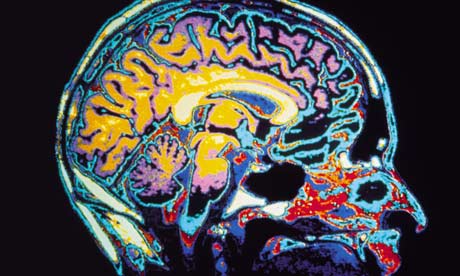
Brain scan of a brain
"Learning to read is good for the brain" suggest brain scan scientists at the Homer Simpson Institute for Obvious Experimental Results. Brain scans were taken of people who know how to read versus, oh, I don't know, how about people who have lived in a closet and were raised via a feeding tube through the keyhole. Scans indicated the brains of readers showed more vigorous responses to the written word than the brains of illiterates. "You wouldn't think we would be, but we were kind of blown away by this" said one psychologist.


In the tech realm, 3D glasses are expected on the market soon, from Oakley, Marchon, and Xpand. At approximately $120 a pop, these glasses will allow people to see the world in three dimensions, albeit, only in black and white.

Bluto


And finally - in a followup to a previous Science Friday piece about the possibility that the Higgs Boson may look like Mister Peanut, but, like, really, really tiny - Mister Peanut has broken his silence after 80 years. "There is definitely no resemblance between myself and the Higgs Boson" read a statement from Mister Peanut. "I would rather think the Higgs Boson would look more like Mr. Natural, or perhaps Bluto, from the Popeye cartoon series". Neither Mr. Natural nor Bluto could be reached for comment.
Mr. Natural